
Intro
You may also enjoy:
Crossword puzzles are word games where players fill in a grid of squares using clues to determine the correct words. Each word fits into the puzzle either across or down. Many people enjoy crossword puzzles as a hobby because they challenge vocabulary, memory, and problem-solving skills while providing a relaxing mental activity.
What Are Crossword Puzzles?
A crossword puzzle is a word puzzle where answers to clues are placed into a grid of connected squares.
Each clue corresponds to a word that fits into the grid. Words are placed in two directions:
• across (horizontal)
• down (vertical)
Letters from different words intersect, which helps confirm correct answers.
Crossword puzzles vary in difficulty and may include themes, wordplay, or trivia knowledge.
Who Is This Hobby Good For?
Crossword puzzles appeal to many different people.
They are especially good for:
• people who enjoy word games
• readers and language enthusiasts
• people who enjoy mental challenges
• puzzle lovers
• people looking for quiet activities
Many people enjoy solving crosswords as part of a daily routine.
Hobby Difficulty Scale
⭐⭐ Moderate
Easy puzzles are beginner-friendly, while advanced puzzles can be very challenging.
What Do You Need to Get Started?
Crossword puzzles require very few supplies.
Most beginners start with:
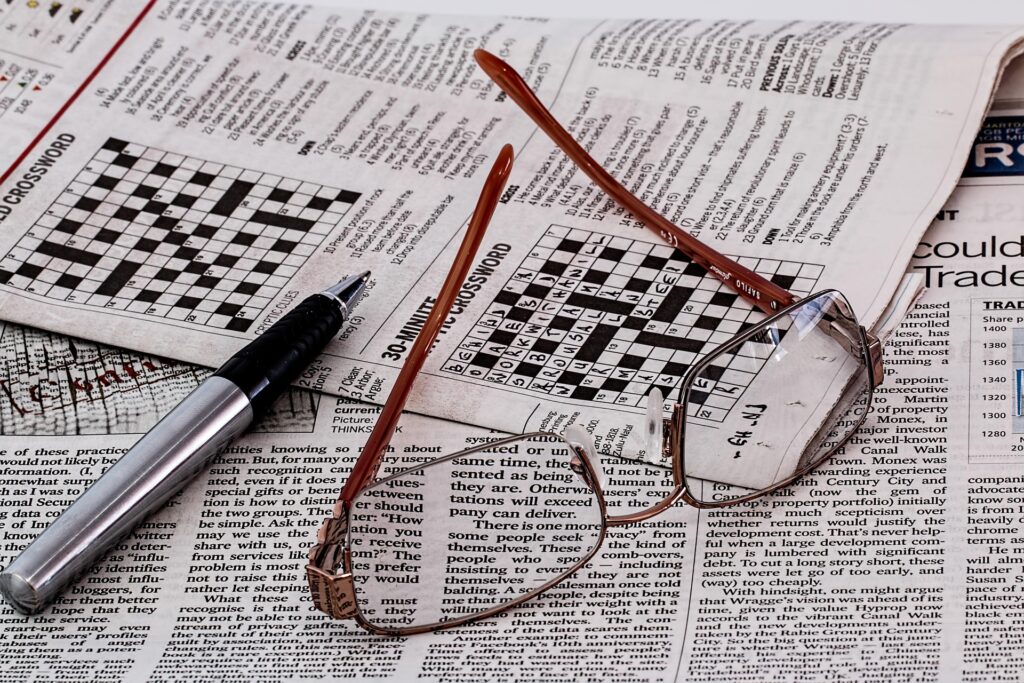
• crossword puzzle book or newspaper
• pencil or pen
Some people also enjoy solving puzzles digitally, but many hobbyists prefer the traditional paper format.
Tools & Materials
Tools
• pencil or pen
• eraser (optional)
Materials
• crossword puzzle book
• newspaper or magazine puzzles
Some hobbyists also keep dictionaries or word lists nearby.
How Much Does It Cost to Start?
Crossword puzzles are very inexpensive.
Typical beginner costs:
Low cost: $5–$15
Moderate: $15–$30 for puzzle books
Many puzzles can also be found in newspapers or magazines.
How Long Does It Take to Learn?
Crossword solving improves with practice.
Easy puzzles: 10–30 minutes
Medium puzzles: 30–60 minutes
Advanced puzzles: longer depending on difficulty
As vocabulary and puzzle familiarity improve, solving becomes easier.
Common Beginner Mistakes
Some common beginner mistakes include:
• skipping easy clues
• focusing too long on difficult clues
• forgetting to use crossing letters for hints
• becoming discouraged by unfamiliar words
Working through easier clues first often helps unlock the puzzle.
Are There Safety Concerns?
Crossword puzzles are very safe.
The main challenge is mental rather than physical.
What Is the Best Setting for This Hobby?
Crossword puzzles can be solved almost anywhere.
Common settings include:
• at home
• in cafés
• during travel
• relaxing in the evening
Many people enjoy solving puzzles with a cup of coffee or tea.
How Old Should You Be?
Crossword puzzles can be enjoyed by many ages.
Children: simple beginner puzzles
Teenagers: standard puzzles
Adults: puzzles of any difficulty
Many people develop crossword skills over time.
What Is the History of Crossword Puzzles?
Modern crossword puzzles first became popular in the early 20th century. Newspapers began publishing puzzles as entertainment for readers, and the hobby quickly grew in popularity.
Today crossword puzzles appear in newspapers, puzzle books, and many other publications around the world.
Why People Love Crossword Puzzles
People enjoy crossword puzzles for many reasons.
• mental challenge
• vocabulary improvement
• relaxing daily routine
• satisfaction of solving clues
Many puzzle enthusiasts enjoy solving crosswords every day.
Tips for Beginners
• start with easy puzzles
• fill in short words first
• use intersecting letters as hints
• take breaks if stuck
Practice helps improve solving speed and confidence.
Conclusion
Crossword puzzles are a classic word game that challenges the mind while providing relaxing entertainment. With practice and patience, beginners can develop strong puzzle-solving skills.
You might enjoy: